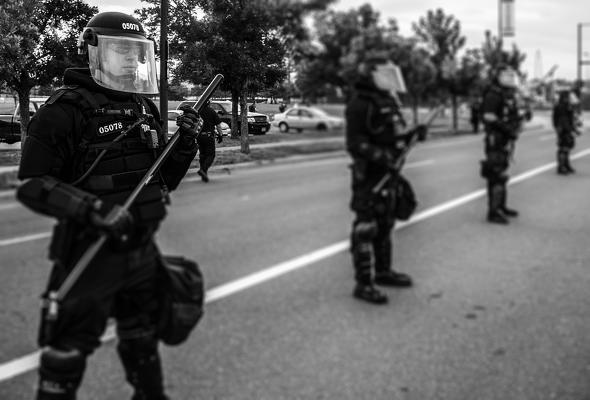
Calm in the Storm…

by Admin on December 16, 2008

High Noon Film is a specialized production company, communications consultant, and marketing resource with expertise in law enforcement, emergency management, and related fields.

We’re a government contractor, but we’re outside the box & the beltway. Our work is consistently praised for blending education and entertainment. A leading industry publication recently called it “Must See TV” and compared our work to TV series like “CSI” & “24″.

[click to continue…]

{ Comments on this entry are closed }

PETN Could Have Downed Plane

by Admin on December 29, 2009

Medium Yield Explosvie-PETN

Medium Yield Explosvie-PETN

According to unnamed sources in a Washington Post article, the total amount of the explosive PETN (Pentaerythritol Tetranitrate) carried by suspected terrorist Abdulfarouk Umar Muttalab, was more than sufficient to have disabled the plane.

To those in the counter-terrorism community, this incident exposes a number of gaps in screening procedures used internationally, and the problems associated with trying to instill global standards on such an enterprise. It appears that terrorists continue to exploit less stringent screening by carefully selecting their points of departure, as was the case with the 9/11 hijackers.

But the incident also calls into account our own information sharing procedures and “no fly” lists. By all accounts, this suspect should have raised a number of red flags that when taken together would have singled him out for additional screening, or a denial of his Visa. Unfortunately, the current system does a poor job of tying these markers together.

What measures were taken to protect commercial aviation against PETN being carried inside underwear or even anal cavities? This method of attack was used by a Saudi suicide-bomber, Abdullah Hassan al Asiri in August of 2009. He attempted to murder the Saudi Arabian Deputy Minister using very similar methods, and was also backed by a cell based in Yemen.

Were travelers departing Yemen subject to any increased screening after that incident? Were additional “puffer” machines, explosive sniffing dogs, or other measures increased for passengers leaving Yemen?

It may well be that the American intelligence community suffers from it’s own vast global dominance, being too slow to react to a nimble foe. The incident involving a PETN attack sewn into underwear occurred late in August, barely four months ago. In an entrenched bureaucracy four months is barely enough time to study such an incident, much less to deploy effective countermeasures. But to small, agile organizations like the cells utilized by our enemies, four months is more than enough time to organize another attack.

Equally puzzling is why terrorists remain fixated on commercial aviation as a target, especially when soft targets abound both domestically and internationally. The lack of Central leadership may be the reason. Individual actors and small cells are left to plan and execute their own attacks, resulting in a series of “copycat” attacks based on previous attempts.

Regardless of the outcome of the reviews underway now, Americans may have to come to grip with another reality that the rest of the world takes for granted. No amount of screenings, watch lists, or restrictions on activity within an aircraft can guarantee 100% safety. We must balance our desire for security with essential liberty, and accept that any conflict will generate casualties. Learning to accept those casualties is necessary unless we wish to see our society transformed into a unrecognizable police state.

For many, the screening procedures already in place have resulted in the choice to travel less often by air. Increasing those restrictions will surely result in more travelers reaching the same conclusion. These attacks are slowly changing the view of air travel and it’s usage by Americans–and achieving at least a moral victory for the terrorists.

Theories for the Spreading Pattern

While it is difficult to be certain about why the swine flu has spread in the fashion it has, physicians did have some possible explanations.

“We think that these regions are seeing later activity because schools don’t start until later,” said Turner of the less-affected regions of the country.

He said many cases probably are a result of students either catching swine flu in their communities or places they traveled during the summer, then bringing the virus with them to campus.

For different reasons, other regions have been less affected.

Dr. Christian Sandrock, an assistant professor of pulmonary and critical care medicine at the University of California, Davis, works in a region that has seen perhaps the fewest cases this season.

“We haven’t really seen it hit the emergency departments and clinics in hospitals yet,” he said. “We definitely weren’t untouched in June and July.”

Weather, he said, may account for the difference.

“We tend to have less humid, much dryer air,” he said. That often accounts for less respiratory illness.

He also noted the heavy rains that have led to flooding in some areas of the South, which also brought more people from the outdoors, and California has had relatively nice weather.

Sandrock said California tends to see later ends to summer weather, and therefore, later starts to flu season.

“It might be we’re just going to catch up a week or two later than the rest of the country,” he said. “I don’t want to catch up, but we might.”

School’s In

Catching up may be what the South is doing now.

“Back in May, we were at a much smaller problem with H1N1 than most of the United States, and it’s not because we weren’t looking,” said English.

Schools closing earlier may have had something to do with that, although English said schools being in session probably would not account for all of the differences in flu rates.

“We’re accustomed to the same sort of thing happening every year in the winter,” he said, noting that rates rise until the Christmas holiday, then drop off, rising when schools return in January.

Of the current spike, English said, “We all knew that might happen when schools started back this fall.”

Course of Infections Unclear

While swine flu has been widespread in several areas, doctors noted that most cases can be dealt with without hospitalization.

“Most of those children are not severely ill, and [are] not admitted to the hospital,” said English of the patients who have come to Le Bonheur.

He said that 100 children have been admitted to the hospital for swine flu, with about 15 needing to go to the intensive care unit.

Turner added that the disease has been mild among college students, despite the number of infections it has caused.

Turner said he expects that swine flu cases will drop, and that public health officials should take advantage of the opportunity that will provide.

The disease has caused 21,000 infections in college students nationwide, he said, but only 37 hospitalizations and no deaths thus far.

“I think as we’ve got into it, more people are comfortable with the fact it’s a mild disease,” said Turner. However, he warned, complacency may present a problem.

“This is technically the second wave,” he said, the first coming last spring.

“For this wave, I would imagine that college campuses will have new cases appearing for anywhere from four to six weeks,” he added. “By November, we’ll probably be through this wave, which will give us the opportunity to get students vaccinated for H1N1.”

And that will be important to prevent spread of the illness.

“It hasn’t spread to the community yet where the most vulnerable people may be,” said Turner. “I suspect that we will see it go out in the community, into teenagers and to schoolchildren.”

And while only a minority of children with swine flu need hospitalization, parents should remain vigilant, said English.

“We’ve seen otherwise healthy children develop complications of the flu,” he said, because of secondary infections.

“While it is true that most patients are not having severe complications, some of them are,” said English. “We just don’t know yet [what] the total number of patients with life-threatening disease will be.”

——–

For more information on the web: CDC H1N1 Map

{ Comments on this entry are closed }

Support HR 2160 Amateur Radio Emergency Communications Enhancement Act

September 16, 2009

One of the most valuable resources to the emergency management community are amateur radio operators. “Hams” provide a valuable backup communications option that is largely independent of other infrastructure such as commercial electricity, telephone, and Internet connectivity.
History has shown that just when we think amateur radio has become an unnecessary relic of an earlier era, [...]

Read the full article →